On April 24, 2026, American River College hosted its first AI Symposium, a half-day event that brought together educators, students, and industry partners to talk honestly about what artificial intelligence means for teaching and learning.
From 8:00 a.m. to 1:30 p.m., Raef Hall, the STEM Center, and the CTE Building were full of conversations about assignments, accessibility, policy, creativity, and the future of work. The goal was simple but ambitious: move beyond AI hype and focus on what actually helps students learn and succeed.
Incredibrain at the Center
The symposium was designed and led by Dr. Dyanne Marte, American River College’s AI Faculty Fellow and one of the founders of Incredibrain, together with Professor Michael Angelone, CCC Vision 2030 Changemaker, ARC faculty member, and Incredibrain co-founder.As co-founders, they shaped the day to be hands-on, cross-disciplinary, and grounded in real classroom practice. In the opening session, Dr. Marte welcomed attendees alongside ARC President Dr. Lisa Cardoza, naming what many educators are feeling: AI is already in students’ lives, and colleges need safe spaces to explore, experiment, and build thoughtful guardrails rather than ignore the technology or react out of fear.
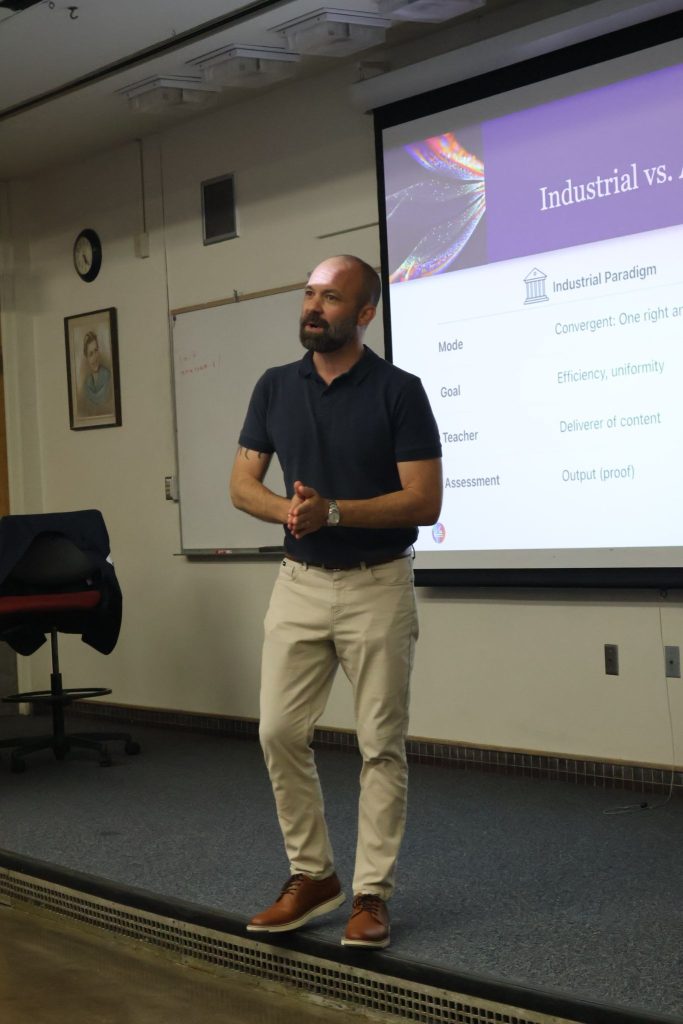
The symposium brought Incredibrain’s mission to life: helping institutions move from confusion to confident, responsible AI use.
A Keynote About People, Not Just Tools
The morning keynote, “Beyond the Hype: Rehumanizing Education in the Age of Artificial Intelligence,” was delivered by Chesa Caparas, AI Faculty Fellow at De Anza College and professor of English and Ethnic Studies.
Instead of giving a tour of tools, she focused on people and on how colleges can keep human judgment at the center while AI systems evolve quickly. Her message set the tone for the rest of the day: AI should support learning, equity, and community, not replace them.
Sessions for Every Comfort Level
After the keynote, participants chose from three levels of sessions: L1 for those new to AI, L2 for classroom and workflow applications, and L3 for policy, governance, and institutional strategy.
In the first breakout block, sessions explored assessment redesign, AI-powered enrollment and engagement, Microsoft Copilot and Gemini as supports for student success, and Vibe Code Academy, a student-created platform that makes coding more approachable through short interactive lessons.
This structure gave everyone a way in, whether they were just curious or already experimenting with AI in their classrooms and offices.
Spotlight: Authorship from Superhuman
One of the most talked-about tools of the day was Authorship from Superhuman (formerly Grammarly for Education). Partnership Specialist Marc Santos led multiple sessions on “Authorship in the Writing Process,” showing how the tool reveals how a document is created over time, including what a student writes directly and where AI-assisted text appears.
What resonated with faculty was the shift in mindset: the goal was not simply to catch AI use. Instead, Authorship was positioned as a way to create more transparent, informed conversations about writing, revision, and academic integrity.
Michael Angelone’s Anchor Sessions
Professor Michael Angelone played a major leadership role throughout the symposium. He presented “When the Artifact Fails: Rebuilding Trust in Assessment in the Age of AI,” moderated “AI, Authorship, and the Future of Publication,” and moderated “From Guidelines to Guardrails: AI Policy and Legislation in California Community Colleges.”
Together, these sessions pushed attendees to consider what counts as evidence of learning, how concepts like authorship and plagiarism are shifting, and what guardrails colleges need as AI becomes part of daily academic life.
Centering Student Voice and Real-World Practice
The symposium made sure students were not just talked about, but heard. A student panel, “AI in the Classroom and Beyond,” gave students space to share how they actually use AI in coursework, where the tools help, and where they create confusion or stress.
Other sessions connected campus learning to the world beyond ARC. Presenters from Intel, Equinix, College Track, AweFull Learning, Gravyty, Nectir, and other partners showed how AI already shapes business operations, infrastructure, student support services, nonprofits, and media.
Community, Food, and a Sense of Place
Community was built into the design of the day. Breakfast and lunch in the Community Rooms atrium gave people time to debrief sessions, trade ideas, and build new cross-campus relationships.
The symposium also reflected American River College’s hands-on learning culture. Student-run spaces like the Bakery and the Oak Café highlight how ARC pairs classroom learning with real-world hospitality and culinary experience.
From Ideas to Guardrails
In the final breakout block, attention turned to policy and long-term direction. The “From Guidelines to Guardrails” panel connected proposed Los Rios AI guidelines and human-in-the-loop practices with statewide frameworks like Vision 2030 and emerging AI legislation shaping how community colleges use AI in teaching, governance, and student services.
Other sessions explored authentic assessment, Universal Design for Learning, accessibility, and course design that keeps human creativity and productive struggle at the center.
Why This Symposium Matters
What made American River College’s AI Symposium stand out was not just the number of sessions or the variety of speakers, but the way it brought difficult questions into one shared space. Faculty, students, technologists, lawyers, policy experts, and community partners sat at the same tables, wrestling with how AI is changing education and what colleges should do next.
For Incredibrain, this symposium was more than a single event. Under the leadership of co-founders Dr. Dyanne Marte and Professor Michael Angelone, it demonstrated what responsible AI adoption can look like when it starts from the classroom and moves outward: thoughtful, collaborative, equity-minded, and firmly focused on rehumanizing education in an AI-shaped world.